 |
Call Now : +855 12 879 659
|
|
Cambodia Information
Tourist Attractions
Other Things To Do
|
Itineraries & quotation
One-Day Visit: Small Circuit Visit Angkor Wat, Angkor Thom & Ta Prohm ( the Tomb Raider Movie temple) This morning at 8:30AM you will be picked up we journey to the mother of all temples Angkor Wat.
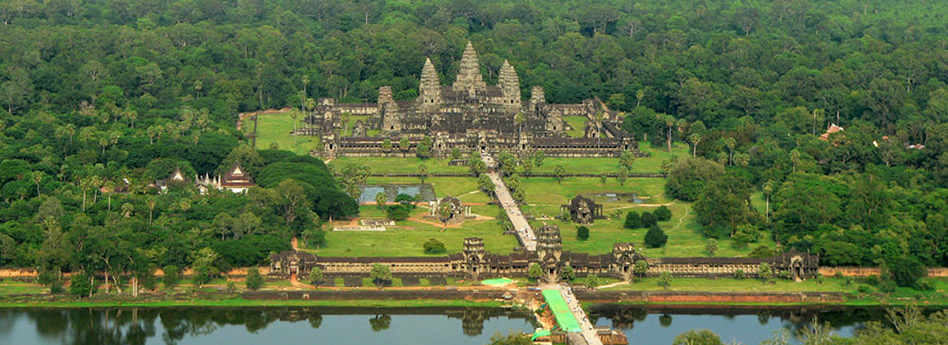
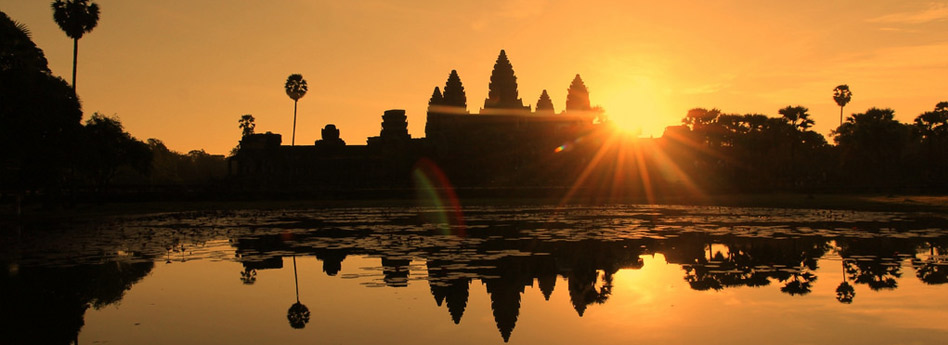
Angkor Wat: One of the seventh wonder of the world and the largest religous building in the world, representing Cambodia it's self.
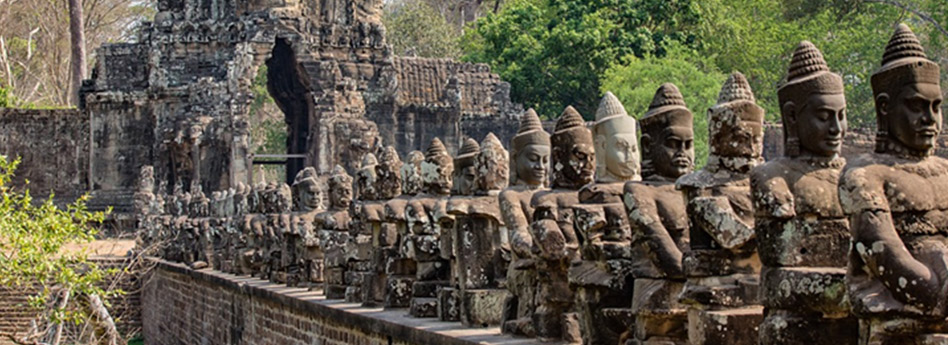
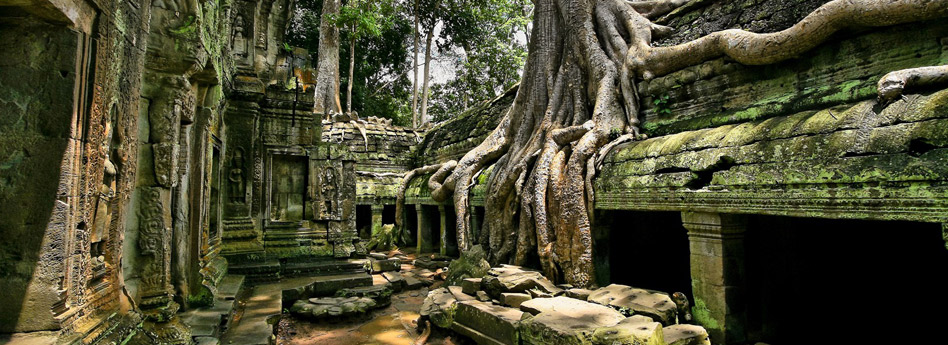
Angkor Thom, the last capital, was indeed a ''Great City'' as its name implies, and it served as the religious and administrative centre of the vast and powerful Khmer Empire. It was grander than any city in Europe at the time and must have supported a considerable population which may have been as high as one million. Bayon: built in the end of 12 century in dedication to Buddha, is charming with the decoration of smiling faces, and the most favourite temple among tourists. Visit Baphuon built in the middle of 11th century dedicated to Shiva. According to Zhou Daguan, Baphuon was the towers of bronze while Bayon the towers of gold. Then continue to the ancient royal palace where the kings of Angkor lived. Like much of Angkor Thom, the residences of the king, and those who worked in the palace, were built of wood and have disintegrated, leaving no traces. See Phimeanakas (aerial palace), located in inside the Royal Palace compound, was the temple where the king worshipped. It must originally have been crowned with golden pinnacles, as Zhou Daguan described it as the '' Tower of Gold''. Walk through the compound to the Tarrace of the elephants: built in the end 12th century by Jayavarman VI, located directly in front of the Royal Palace enclosure wall. Before we move on to the tomb raider temple Ta Prohm we have lunch breakfast first. Ta Prohm: built by Jayavarman VI, a Buddhist monastery dedicated to his mother shrouded in the jungle, the temple of Ta Prohm is ethereal in aspect and conjures up a romantic aura. Trunks of trees twist amongst stone pillars. Fig, banyan and kapok trees spread their gigantic roots over, under and in between the stones, probing walls and terraces apart, as their branches and leaves intertwine to form a roof above the structures. Visit Banteay Kdei: built by king Jayavarman VII was used as Buddhist monastic complex and was undoubtedly an important temple. Banteay Kdei is worth a visit as has some good carving and is less crowded than other monuments of the same period. The temple is similar in art and architecture to Ta Prohm, but it is smaller and less complex. We finish and head back to the hotel aroughly at 3PM. End of program Price for one day visit:
1 person=$80
Inclusions: - A good A/C car or van with a driver
-Cold pure drinking water and wet tissue during the tour Exclusions: -Angkor Pass for seinghtseeing -Extra charge for sunrise -Extra charge for Banteay Srei and other further temples which are not mentioned on the itinerary -Hotel Rates -Tip -All other fees not mentioned above If you have any questions related to the above itinerary, please do not hesitate to contact us as we are happy to discuss any changes. Note: No deposit required You just pay after the tour Two-Day Visit: Small & Grand Circuit temples
Day 1: This morning at 8:30Am after breakfast you will be picked up and we leave the hotel for Angkor Wat: built in early 12th century by king Suryavarman II (reigned 1113-1150) in dedication to Vishnu. Angkor Wat is the largest Hindu monument of Angkor group and one of the most intact, is an architectural masterpiece. It perfection, balance, proportions, reliefs and sculpture make it one of the finest monuments in the world.
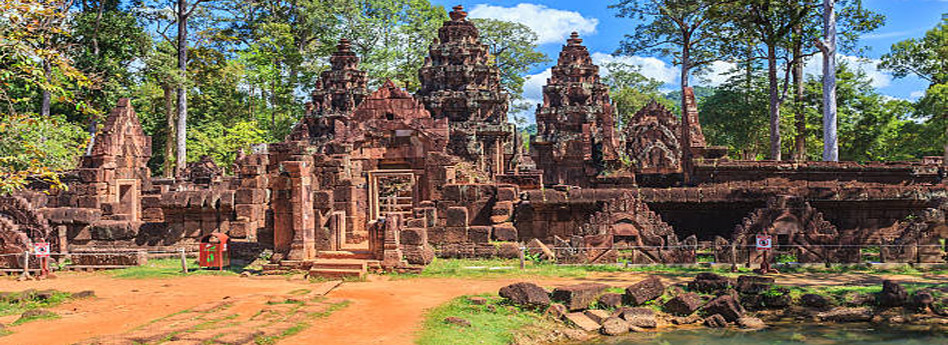
Angkor Thom, the last capital, was indeed a ''Great City'' as its name implies, and it served as the religious and administrative centre of the vast and powerful Khmer Empire. It was grander than any city in Europe at the time and must have supported a considerable population which may have been as high as one million. Bayon: built in the end of 12 century in dedication to Buddha, is charming with the decoration of smiling faces, and the most favourite temple among tourists. Visit Baphuon built in the middle of 11th century dedicated to Shiva. According to Zhou Daguan, Baphuon was the towers of bronze while Bayon the towers of gold. Then continue to the ancient royal palace where the kings of Angkor lived. Like much of Angkor Thom, the residences of the king, and those who worked in the palace, were built of wood and have disintegrated, leaving no traces. See Phimeanakas (aerial palace), located in inside the Royal Palace compound, was the temple where the king worshipped. It must originally have been crowned with golden pinnacles, as Zhou Daguan described it as the '' Tower of Gold''. Walk through the compound to the Tarrace of the elephants: built in the end 12th century by Jayavarman VI, located directly in front of the Royal Palace enclosure wall. We have lunch break here first before we continue our visit to Ta Prohm temple. Ta Prohm: built by Jayavarman VI, a Buddhist monastery dedicated to his mother shrouded in the jungle, the temple of Ta Prohm is ethereal in aspect and conjures up a romantic aura. Trunks of trees twist amongst stone pillars. Fig, banyan and kapok trees spread their gigantic roots over, under and in between the stones, probing walls and terraces apart, as their branches and leaves intertwine to form a roof above the structures. Visit Banteay Kdei: built by king Jayavarman VII was used as Buddhist monastic complex and was undoubtedly an important temple. Banteay Kdei is worth a visit as has some good carving and is less crowded than other monuments of the same period. The temple is similar in art and architecture to Ta Prohm, but it is smaller and less complex. We finish our tour and head back to the hotel at roughly 3PM. End of day1 Day 2: This morning we leave the hotel at 8:30AM and journey to Visit Preah Khan: the ''Sacred Sword'', an extensive 56 hectares Buddhist complex built in AD 1191 as a monastery and centre for learning by king Jayavarman VII (AD1181-1220) and dedicated to his father. Like Ta Prohm, Preah Khan is also a jungle temple and there are some large trees grow on the temple. Visit Neak Pean: built by king Jayavarman VII, located in the centre of the Jayatataka '' reservoir'' called North Baray and placed on the same exis as Preah Khan. Orginally, it could only be reached by boat. It is a small, somewhat out-of-the-way temple with a unique layout, decoration and symbolism. It have served as a place where pilgrims could go and take the water, both physically and symbolically - the Khmer equivalent of a spa. VisitTa Som: built by king Jayavarman VII, a Buddhist temple (dedicated to the father of the king). It is a small, quiet temple and affords a delightful undisturbed visit. A significant feature of Ta Som is the growth of a huge ficus tree on the east gateway, which provides a dramaic example of nature and art entwined. Visit East Mebon: built by king Rajendravarman II (reigned AD944-968) dedicated to Shiva, an ancestor temple in memory of the parents of the king. East Mebon once stood on a small island in the middle of the Eastern Baray, which was a large body of water (2 by 7 kilometres) fed by the Siem Reap River. We then head further to the temple of Banteay Srei and along the way you enjoy the view on countryside and cattles. We will have eat at a local restaurant here. They make a very delicious Amok fish here. Visit Banteay Srei: This petite pink temple is the jewel in the crown of Angkor-era sculture. The elaborate carvings here are the finest found in Cambodia and the name translates as '' Citadel of the Women'', thanks to the intricate detail here, considered too fine for the hands of a man. Originally believed to date from the later part of the Angkor period, inscriptions at the site suggest it was built by a Brahman in 967. We finish our tour and head back to the hotel roughly at 3PM. End of program
Price for two-day visit: Inclusions: -Official English speaking tour guide - A good A/C car or van with a driver -Extra charge for further temple of Banteay Srei -Cold pure drinking water and cold wet tissue during the tour -Transfer in and out services (during the tour only). Exclusions: -extra charge for sunrise -Angkor Pass for sightseeing - Extra charge for other further temples which are not mentioned on the itinerary - Hotel rate - Tip - All other fees not mentioned above If you have any questions related to the above itinerary, please do not hesitate to contact us as we are happy to discuss any changes. Note: No deposit required You just pay after the tour Three-Day Visit: Small, Grand Circuit temples & Roluos Group & Kompong Pluk floating village Day 1: Vsit Roluos Group This morning we leave the hotel at 8:30AM and travel to the three pre-Angkorian temples of Roluos. The three temples of Preah Ko, Bakong and Lolei are clustered together near the modern village of Roluos, and extend over an area of three kilometers east of the Tonle Sap. The Roluos group, dating from the late ninth century, is the earliest extend site of the Angkor period that is open to visitors. The three temples belonging to this important group have similar characteristics of architecture, decoration, materials and construction methods, which combine to reveal the beginning of the classic period of Khmer art. The brick structures are decorated with magnificent sandstone deities in niches and lintels, all of which are in remarkably good condition. Preah Ko: erected by Indravarman I in the late 9th century in dedication to his defied ancestors in 879. There are inscriptions in Sanskrit on the door frame. Bakong: built and dedicated to Shiva by Indravarman I, this is the largest and most interesting of the Roluos Group temples and still has an active Buddhist monastery. Lolei: Built on an islet by Yasovarman I (who ruled from 889 to 910), the founder of the first city of Angkor. The sandstone carvings in the niches of the temple are notable as are the Sanskrit inscriptions on the doorposts. Then continue to see the floating vilage at Kompong Phluk on Tonle Sap (the largest fresh water lake in Southeast Asia). On our way back we stop at Steung Trocheak restaurant by the river of Roluos for lunch before we head back to the hotel roughly at 3PM. Day 2: This morning we leave the hotel at 8:30AM and travel to Angkor Wat: built in early 12th century by king Suryavarman II (reigned 1113-1150) in dedication to Vishnu. Angkor Wat is the largest Hindu monument of Angkor group and one of the most intact, is an architectural masterpiece. It perfection, balance, proportions, reliefs and sculpture make it one of the finest monuments in the world.
Angkor Thom, the last capital, was indeed a ''Great City'' as its name implies, and it served as the religious and administrative centre of the vast and powerful Khmer Empire. It was grander than any city in Europe at the time and must have supported a considerable population which may have been as high as one million. Bayon: built in the end of 12 century in dedication to Buddha, is charming with the decoration of smiling faces, and the most favourite temple among tourists. Visit Baphuon built in the middle of 11th century dedicated to Shiva. According to Zhou Daguan, Baphuon was the towers of bronze while Bayon the towers of gold. Then continue to the ancient royal palace where the kings of Angkor lived. Like much of Angkor Thom, the residences of the king, and those who worked in the palace, were built of wood and have disintegrated, leaving no traces. see Phimeanakas (aerial palace), located in inside the Royal Palace compound, was the temple where the king worshipped. It must originally have been crowned with golden pinnacles, as Zhou Daguan described it as the '' Tower of Gold''. Walk through the compound to the Tarrace of the elephants: built in the end 12th century by Jayavarman VI, located directly in front of the Royal Palace enclosure wall. We have lunch breakfast before we continue our visit to Ta Prohm temple. Ta Prohm: built by Jayavarman VI, a Buddhist monastery dedicated to his mother shrouded in the jungle, the temple of Ta Prohm is ethereal in aspect and conjures up a romantic aura. Trunks of trees twist amongst stone pillars. Fig, banyan and kapok trees spread their gigantic roots over, under and in between the stones, probing walls and terraces apart, as their branches and leaves intertwine to form a roof above the structures. Visit Banteay Kdei: built by king Jayavarman VII was used as Buddhist monastic complex and was undoubtedly an important temple. Banteay Kdei is worth a visit as has some good carving and is less crowded than other monuments of the same period. The temple is similar in art and architecture to Ta Prohm, but it is smaller and less complex. We finish our tour and then head back to the hotel roughly at 3PM. Day 3: This morning we leave the hotel at 8:30AM and travel to the temple of Preah Khan Visit Preah Khan: the ''Sacred Sword'', an extensive 56 hectares Buddhist complex built in AD 1191 as a monastery and centre for learning by king Jayavarman VII (AD1181-1220) and dedicated to his father. Like Ta Prohm, Preah Khan is also a jungle temple and there are some large trees grow on the temple. Visit Neak Pean: built by king Jayavarman VII, located in the centre of the Jayatataka '' reservoir'' called North Baray and placed on the same exis as Preah Khan. Orginally, it could only be reached by boat. It is a small, somewhat out-of-the-way temple with a unique layout, decoration and symbolism. It have served as a place where pilgrims could go and take the water, both physically and symbolically - the Khmer equivalent of a spa. VisitTa Som: built by king Jayavarman VII, a Buddhist temple (dedicated to the father of the king). It is a small, quiet temple and affords a delightful undisturbed visit. A significant feature of Ta Som is the growth of a huge ficus tree on the east gateway, which provides a dramaic example of nature and art entwined. Visit East Mebon: built by king Rajendravarman II (reigned AD944-968) dedicated to Shiva, an ancestor temple in memory of the parents of the king. East Mebon once stood on a small island in the middle of the Eastern Baray, which was a large body of water (2 by 7 kilometres) fed by the Siem Reap River. We then head further to the lady temple of Banteay Srei. On the way you will enloy the views of countryside and cattles. Before we continue our visit we eat luch here where they make a very delicious Amok fish. Visit Banteay Srei: This petite pink temple is the jewel in the crown of Angkor-era sculture. The elaborate carvings here are the finest found in Cambodia and the name translates as '' Citadel of the Women'', thanks to the intricate detail here, considered too fine for the hands of a man. Originally believed to date from the later part of the Angkor period, inscriptions at the site suggest it was built by a Brahman in 967. We finish our tour and then head back to the hotel roughly at 3PM End of program Price for three-day visit: 1 person=$240 2people=$230 3people=$240 4people=$250 5people=$260 6people=$270 7people=$280 8people=$290 9people=$300 10people=310 Inclusions: -English speaking guide -Extra charge for further temple of Banteay Srei -a good A/C car or van with a driver -Cold pure drinking water and cold wet tissue -Transfer in and out services during the tour only Exclusions: - Angkor Pass for sightseeing -Extra charge for sunrise - Extra charge for other further temples wich are not mentioned on the itineary -Boat ticket and floating village entrance fee -Hotel Rate -Tip -All other fees not mentioned above If you have any questions related to the above itinerary, please do not hesitate to contact us as we are happy to discuss any changes. Four-Day Visit: ( Please note that for four-day visit has not been updated the price yet) Day 1: Vsit Roluos Group The three temples of Preah Ko, Bakong and Lolei are clustered together near the modern village of Roluos, and extend over an area of three kilometers east of the Tonle Sap. The Roluos group, dating from the late ninth century, is the earliest extend site of the Angkor period that is open to visitors. The three temples belonging to this important group have similar characteristics of architecture, decoration, materials and construction methods, which combine to reveal the beginning of the classic period of Khmer art. The brick structures are decorated with magnificent sandstone deities in niches and lintels, all of which are in remarkably good condition. Preah Ko: erected by Indravarman I in the late 9th century in dedication to his defied ancestors in 879. There are inscriptions in Sanskrit on the door frame. Bakong: built and dedicated to Shiva by Indravarman I, this is the largest and most interesting of the Roluos Group temples and still has an active Buddhist monastery. Lolei: Built on an islet by Yasovarman I (who ruled from 889 to 910), the founder of the first city of Angkor. The sandstone carvings in the niches of the temple are notable as are the Sanskrit inscriptions on the doorposts. Then continue to see the floating vilage at Kompong Phluk on Tonle Sap (the largest fresh water lake in Southeast Asia).
Day 2: See the sunrise at Angkor Wat then visit Angkor Wat: built in early 12th century by king Suryavarman II (reigned 1113-1150) in dedication to Vishnu. Angkor Wat is the largest Hindu monument of Angkor group and one of the most intact, is an architectural masterpiece. It perfection, balance, proportions, reliefs and sculpture make it one of the finest monuments in the world.
Angkor Thom, the last capital, was indeed a ''Great City'' as its name implies, and it served as the religious and administrative centre of the vast and powerful Khmer Empire. It was grander than any city in Europe at the time and must have supported a considerable population which may have been as high as one million. Bayon: built in the end of 12 century in dedication to Buddha, is charming with the decoration of smiling faces, and the most favourite temple among tourists. Visit Baphuon built in the middle of 11th century dedicated to Shiva. According to Zhou Daguan, Baphuon was the towers of bronze while Bayon the towers of gold. Then continue to the ancient royal palace where the kings of Angkor lived. Like much of Angkor Thom, the residences of the king, and those who worked in the palace, were built of wood and have disintegrated, leaving no traces. see Phimeanakas (aerial palace), located in inside the Royal Palace compound, was the temple where the king worshipped. It must originally have been crowned with golden pinnacles, as Zhou Daguan described it as the '' Tower of Gold''. Walk through the compound to the Tarrace of the elephants: built in the end 12th century by Jayavarman VI, located directly in front of the Royal Palace enclosure wall. Ta Prohm: built by Jayavarman VI, a Buddhist monastery dedicated to his mother shrouded in the jungle, the temple of Ta Prohm is ethereal in aspect and conjures up a romantic aura. Trunks of trees twist amongst stone pillars. Fig, banyan and kapok trees spread their gigantic roots over, under and in between the stones, probing walls and terraces apart, as their branches and leaves intertwine to form a roof above the structures. Visit Banteay Kdei: built by king Jayavarman VII was used as Buddhist monastic complex and was undoubtedly an important temple. Banteay Kdei is worth a visit as has some good carving and is less crowded than other monuments of the same period. The temple is similar in art and architecture to Ta Prohm, but it is smaller and less complex. Day 3: Visit Preah Khan: the ''Sacred Sword'', an extensive 56 hectares Buddhist complex built in AD 1191 as a monastery and centre for learning by king Jayavarman VII (AD1181-1220) and dedicated to his father. Like Ta Prohm, Preah Khan is also a jungle temple and there are some large trees grow on the temple. Visit Neak Pean: built by king Jayavarman VII, located in the centre of the Jayatataka '' reservoir'' called North Baray and placed on the same exis as Preah Khan. Orginally, it could only be reached by boat. It is a small, somewhat out-of-the-way temple with a unique layout, decoration and symbolism. It have served as a place where pilgrims could go and take the water, both physically and symbolically - the Khmer equivalent of a spa. Visit Ta Som: built by king Jayavarman VII, a Buddhist temple (dedicated to the father of the king). It is a small, quiet temple and affords a delightful undisturbed visit. A significant feature of Ta Som is the growth of a huge ficus tree on the east gateway, which provides a dramaic example of nature and art entwined. Visit East Mebon: built by king Rajendravarman II (reigned AD944-968) dedicated to Shiva, an ancestor temple in memory of the parents of the king. East Mebon once stood on a small island in the middle of the Eastern Baray, which was a large body of water (2 by 7 kilometres) fed by the Siem Reap River. Visit Banteay Srei: This petite pink temple is the jewel in the crown of Angkor-era sculture. The elaborate carvings here are the finest found in Cambodia and the name translates as '' Citadel of the Women'', thanks to the intricate detail here, considered too fine for the hands of a man. Originally believed to date from the later part of the Angkor period, inscriptions at the site suggest it was built by a Brahman in 967. Day 4: Contrast: Visit Phnom Kulen Archaeological Park including the Waterfall, Gigantic reclining Buddha and a River of one Thousand Lingas and Beng Mealea (Cambodia forgotten temple) Price for four-day visit: 1 person=$305 2people=$365 3people=$425 4people=$510 5people=$570 Inclusion: -English speaking guide -One-Day Pass for sightseeing in Angkor -Extra charge for Banteay Srei / Beng Mealea & Phnom Kulen -a good A/C car or van with a driver -Cold pure drinking water and cold wet tissue -Transfer in and out services during the tour only -Seasonal fruit Exclusion: -Beng Mealea ticket/Phnom Kulen ticket -Boat ticket and Tonle Sap entrance fee -Hotel Rates - All other fees not mentioned above If you have any questions related to the above itinerary, please do not hesitate to contact us as we are happy to discuss any changes.
|

